

 Product
 Brand
Brand Articles
 Tools
Tools
What Is an ASIC? Design Flow, Applications, and the 2026 AI Custom Silicon Boom
An ASIC, or application-specific integrated circuit, is a chip designed for a specific workload instead of general-purpose computing. That specialization is the reason ASICs can be faster, smaller, and more power-efficient than CPUs, GPUs, or FPGAs for a fixed task. It is also the reason ASICs are expensive to design, hard to change after fabrication, and usually justified only when performance, power, scale, or product differentiation matters enough.
In 2026, ASICs are no longer just a textbook topic or a cryptocurrency-mining keyword. They sit at the center of the AI infrastructure race. Google has moved its Ironwood TPU into general availability, AWS has positioned Trainium3 UltraServers around large-scale training and inference, Broadcom reported rapid growth in AI semiconductor revenue from custom accelerators and AI networking, and OpenAI announced Jalapeno, an LLM inference ASIC co-developed with Broadcom. At the same time, TSMC's annual reporting points to strong AI demand, advanced nodes, and advanced packaging as critical enablers of the next wave of custom silicon.
This guide explains what an ASIC is, how it is designed, where it is used, how it compares with FPGA, GPU, and CPU options, and why recent AI news has made ASICs one of the most important semiconductor topics to understand.
Quick Answer: What Does ASIC Mean?
ASIC stands for application-specific integrated circuit. It is an integrated circuit customized for a defined function, product, or workload.
In simple terms:
A CPU is flexible and general-purpose.
A GPU is programmable and optimized for parallel workloads.
An FPGA is reconfigurable after manufacturing.
An ASIC is fixed-function silicon optimized for one target application.
That fixed design can deliver excellent performance per watt, but it also creates risk: if the specification is wrong, the market changes, or a bug escapes verification, the silicon cannot be corrected as easily as software or FPGA logic.
Why ASICs Matter More in 2026
The latest ASIC conversation is being shaped by AI inference economics. Training frontier models is still compute-intensive, but deployment at scale can involve billions of inference requests. That makes latency, power, memory movement, networking, and total cost of ownership as important as peak compute.
Recent industry signals show why ASICs are getting attention:
Google Cloud release notes state that TPU7x, the first release in the Ironwood family, became generally available on March 31, 2026 for large-scale AI training and inference workloads.
Google described Ironwood as its seventh-generation TPU and the first TPU designed specifically for inference, with pod-scale interconnect and high-bandwidth memory improvements.
AWS highlighted Trainium3 UltraServers, powered by AWS's first 3 nm AI chip, for ambitious AI training and inference workloads.
Broadcom reported Q2 fiscal 2026 AI semiconductor revenue of $10.8 billion, up 143% year over year, citing demand for custom AI accelerators and AI networking.
OpenAI announced Jalapeno, an LLM inference chip co-developed with Broadcom, as part of a multi-generation compute platform for deployment beginning by the end of 2026.
TSMC's 2025 annual report connected robust AI-related demand with leading-edge silicon, 2 nm ramp plans, and advanced packaging technologies such as CoWoS, InFO, TSMC-SoIC, and COUPE.
The common thread is not simply "AI needs chips." It is that AI workloads are becoming stable, large, and economically important enough for companies to design silicon around their own software stacks.
How an ASIC Works
An ASIC works by implementing the required computation or control function directly in hardware. Instead of fetching general instructions and running many possible programs, the ASIC contains logic blocks, memory structures, data paths, interfaces, and accelerators selected for a narrow purpose.
For example:
A networking ASIC may forward packets, manage queues, enforce security rules, and process traffic at line rate.
A camera ASIC may handle image signal processing, autofocus, denoising, and compression.
A Bitcoin mining ASIC may execute one hashing algorithm extremely efficiently.
An AI inference ASIC may be optimized around tensor operations, memory movement, model-serving patterns, and interconnect.
The advantage comes from removing unnecessary flexibility. The cost is that flexibility is gone when the chip is manufactured.
ASIC Design Flow
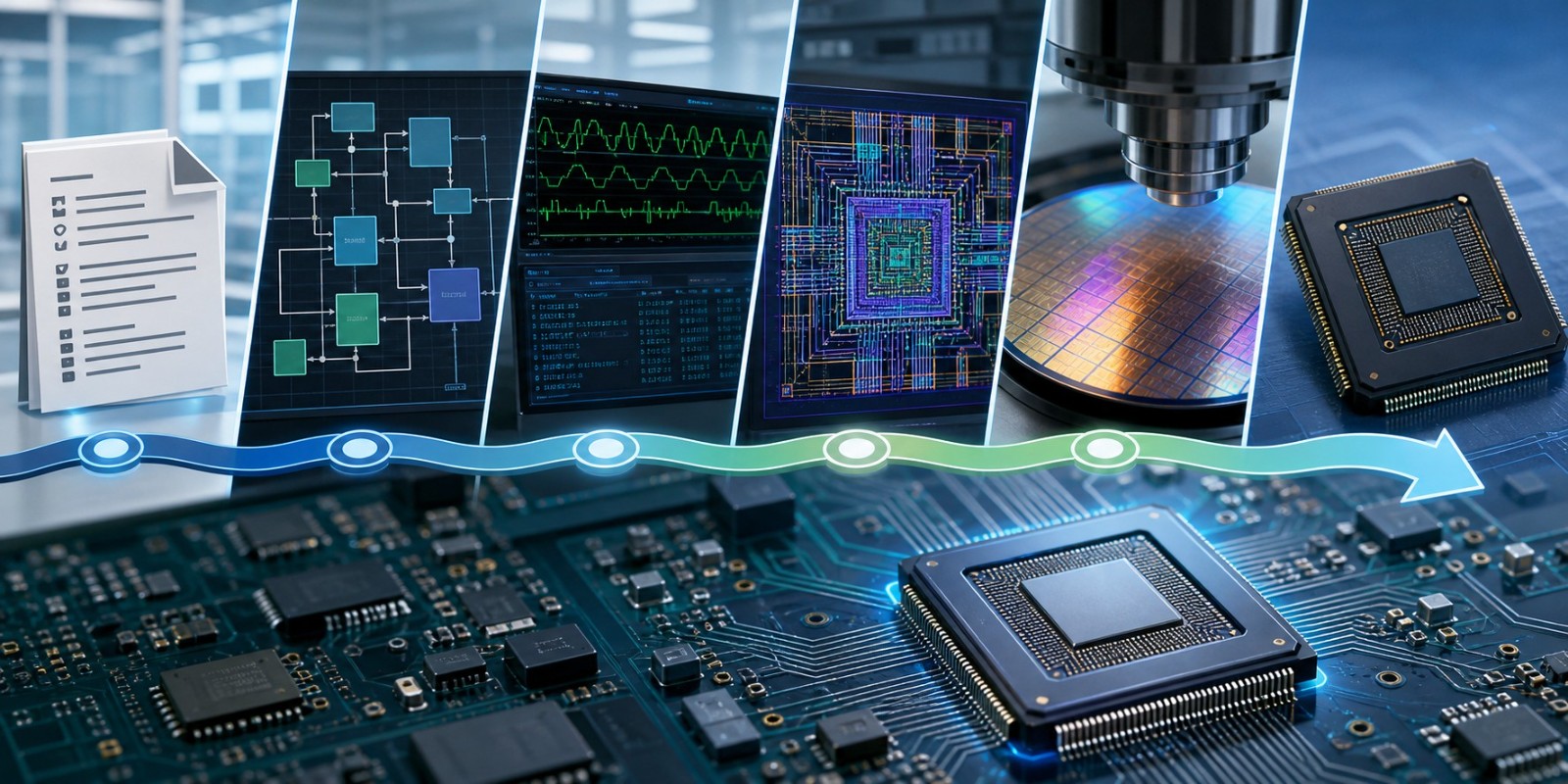
ASIC development is a structured engineering process. The exact flow varies by company, foundry, process node, IP reuse, and verification standard, but most projects follow these stages.
| Stage | What happens | Why it matters |
|---|---|---|
| Requirements | Define workload, power, area, performance, interfaces, safety, security, volume, and cost goals | Mistakes here become expensive later |
| Architecture | Choose data paths, memory hierarchy, accelerators, buses, clocking, and system partitioning | Determines the chip's real efficiency |
| RTL design | Describe logic behavior in Verilog, SystemVerilog, or VHDL | Turns the architecture into implementable hardware |
| Verification | Simulate, formally check, emulate, and validate the design | Reduces the risk of silicon bugs |
| Synthesis | Convert RTL into gates using a technology library | Bridges logical design and physical implementation |
| Physical design | Place, route, close timing, manage power, and verify layout | Determines whether the chip can be manufactured and meet targets |
| Tape-out | Send final design data to the foundry | The point where changes become very expensive |
| Fabrication and packaging | Manufacture wafers, test dies, package chips, and qualify products | Turns design into deployable hardware |
For AI ASICs, the flow increasingly includes software-hardware co-design. The chip is not optimized in isolation. Kernels, compilers, serving frameworks, interconnect, memory layout, scheduling, and model architecture all affect whether a custom accelerator delivers real gains.
ASIC vs FPGA vs GPU vs CPU
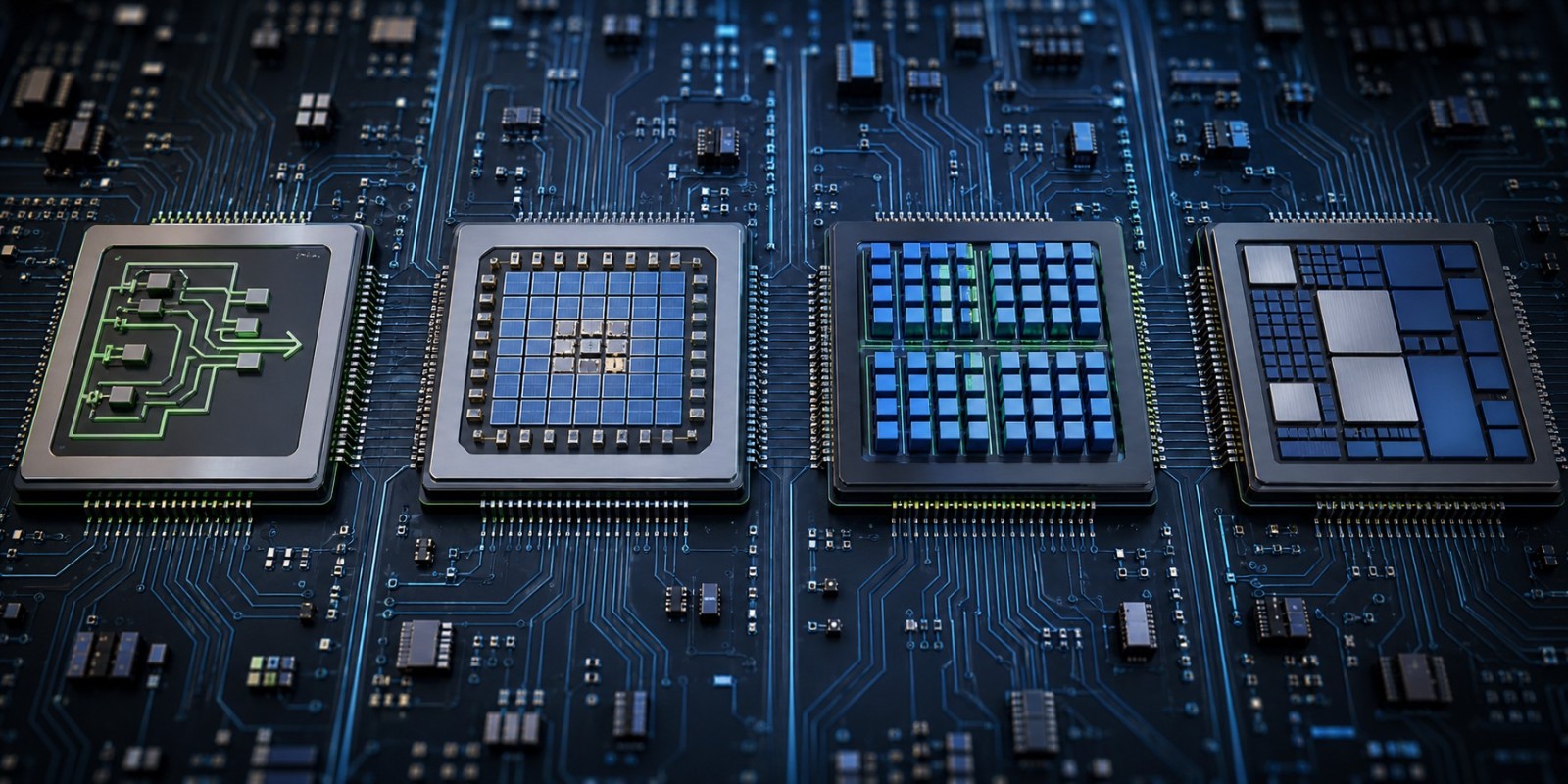
No chip type is "best" in every case. The right choice depends on whether the workload is stable, how much flexibility is needed, and whether the expected volume justifies engineering cost.
| Option | Strength | Limitation | Best fit |
|---|---|---|---|
| CPU | Maximum flexibility, broad software ecosystem | Lower efficiency for highly parallel or fixed workloads | Control, general software, low-volume systems |
| GPU | Strong programmable parallel compute, mature AI ecosystem | High power and cost for some fixed inference workloads | Training, research, flexible AI deployment |
| FPGA | Reconfigurable hardware, lower risk before final ASIC | Lower performance and power efficiency than a well-designed ASIC | Prototyping, low-to-mid volume, changing standards |
| ASIC | Highest efficiency for a stable target workload | High NRE cost, long development cycle, fixed after fabrication | High-volume products, power-sensitive systems, data-center-scale economics |
An FPGA is often the safer choice when the algorithm, protocol, or interface may change. An ASIC becomes more attractive when the design is stable, the volume is high, or the power/performance target cannot be met with programmable hardware.
Main Types of ASICs
ASIC is a broad category. The most common types include:
Full-Custom ASIC
A full-custom ASIC is designed at a very detailed level, sometimes down to transistor-level optimization for critical blocks. This can deliver the best performance, area, or power efficiency, but it requires significant engineering effort.
Standard-Cell ASIC
A standard-cell ASIC uses pre-characterized logic cells from a process library. This is the mainstream approach for many digital ASICs because it balances design efficiency and performance.
Semi-Custom or Gate-Array ASIC
Semi-custom approaches use prebuilt silicon or structured templates with customized interconnect or selected logic. They reduce development time and risk, but they usually sacrifice some optimization compared with a full custom or standard-cell design.
SoC with ASIC Blocks
Many modern chips are system-on-chip designs that include CPUs, memory controllers, interfaces, security modules, AI accelerators, DSPs, and other ASIC-like blocks. In practice, many "ASIC" discussions refer to a custom SoC optimized for a product or platform.
Where ASICs Are Used
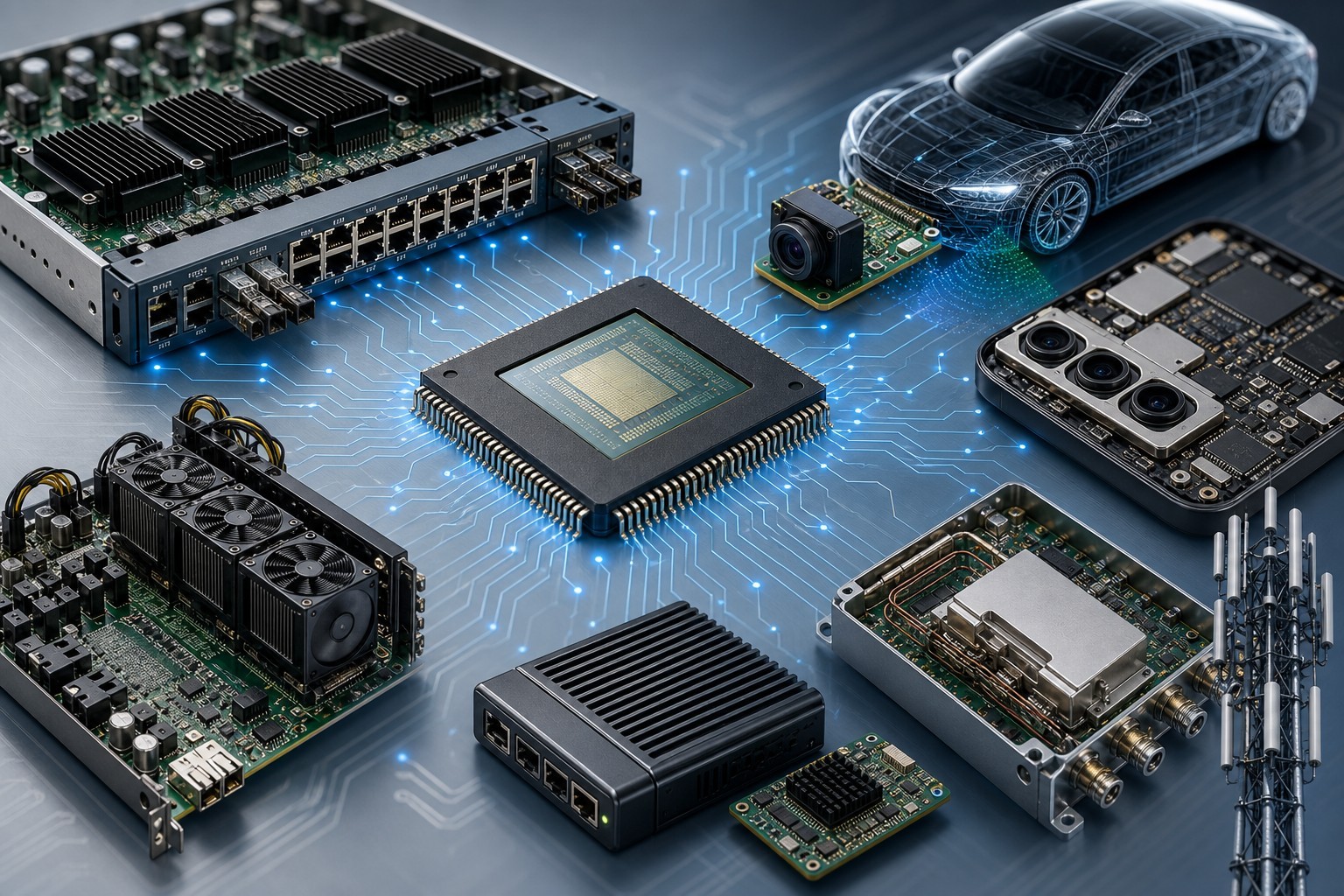
AI and Data Centers
AI ASICs are designed for matrix operations, tensor processing, memory bandwidth, low-latency inference, or model-serving efficiency. Google's TPU family and OpenAI's announced Jalapeno chip are examples of how custom AI accelerators are becoming a strategic infrastructure layer rather than only a component choice.
The 2026 trend is especially focused on inference. Once a model is widely deployed, every millisecond and every watt can affect operating cost and user experience.
Networking and Telecom
Switches, routers, access points, and telecom systems use ASICs for packet forwarding, traffic management, buffering, quality of service, filtering, security processing, and telemetry. HPE's glossary frames ASICs in networking as specialized processors that can outperform general-purpose and configurable processors for those functions.
Automotive and ADAS
Modern vehicles use custom silicon for sensor fusion, radar and camera processing, power management, infotainment, safety functions, and increasingly AI-defined driving features. Automotive ASIC design also requires attention to reliability, functional safety, temperature range, and long product lifecycles.
Consumer Electronics
Smartphones, cameras, wearables, game devices, and smart-home products use ASICs or custom SoCs for imaging, audio, wireless connectivity, display processing, security, and on-device AI.
Cryptocurrency Mining
Crypto mining ASICs are designed for specific hashing algorithms. Their efficiency can be far higher than GPUs for a supported algorithm, but their fixed function makes them poor general-purpose compute devices.
Industrial and Edge AI
Edge AI ASICs or NPU blocks can run inference close to sensors, reducing latency and bandwidth requirements. This matters in cameras, robotics, predictive maintenance, smart meters, and embedded control systems where power and response time are constrained.
The 2026 AI ASIC Supply Chain
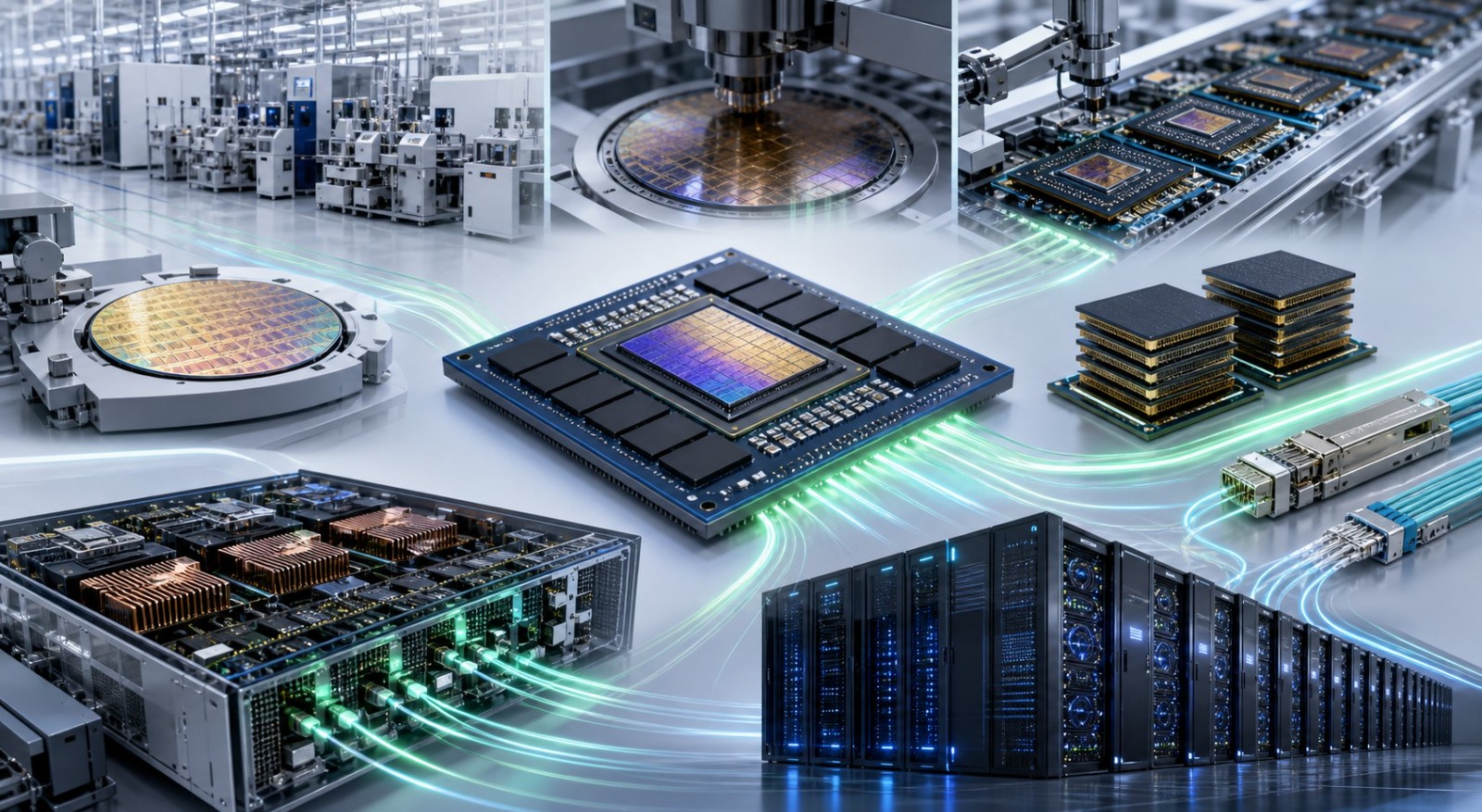
AI ASIC success is not only about chip architecture. The supply chain matters.
A modern AI accelerator may depend on:
Advanced process nodes.
HBM memory stacks.
2.5D or 3D advanced packaging.
High-speed interconnect.
Ethernet or proprietary scale-out networking.
Optical modules and switch ASICs.
Board, rack, power, cooling, and data-center integration.
Compiler and serving software.
That is why recent AI ASIC news often mentions partners, not just chips. OpenAI's Jalapeno announcement named Broadcom for silicon implementation, networking, and connectivity technologies, and Celestica for board, rack, and system expertise. Broadcom's earnings language links custom AI accelerators with AI networking, which reflects the fact that the cluster is now part of the product. TSMC's annual report also highlights advanced packaging and 3D stacking as technologies needed for lower-power large-scale interconnectivity.
For buyers and engineers, this means the question is no longer only "which chip is fastest?" It is "which complete platform can deliver stable capacity, memory bandwidth, software support, power efficiency, and deployment economics?"
Benefits of ASICs
ASICs can provide several advantages:
Higher performance for a specific workload.
Lower power consumption for repeated operations.
Smaller board area by integrating functions.
Lower unit cost at high production volume.
Product differentiation through custom silicon.
Stronger control over the full hardware and software stack.
Potentially better latency and energy efficiency for AI inference.
The benefit is strongest when the workload is fixed, repeated, high-volume, and economically important.
Limitations and Risks
ASICs also carry serious trade-offs:
High non-recurring engineering cost.
Long design and verification cycle.
Manufacturing and packaging dependency.
Limited ability to change after tape-out.
Risk of silicon bugs.
Risk that the target workload changes before volume deployment.
Need for specialized EDA tools, IP, foundry relationships, and verification expertise.
Software ecosystem risk, especially for AI accelerators competing with mature GPU stacks.
For smaller projects, FPGA, GPU, microcontroller, or off-the-shelf SoC options may be more practical.
When Should You Choose an ASIC?
An ASIC is worth considering when most of the following are true:
The workload is stable and well understood.
Power efficiency is a major requirement.
Performance cannot be met with existing processors.
Unit volume is high enough to amortize development cost.
Product differentiation depends on custom silicon.
Long-term supply and platform control matter.
The team can support verification, software, packaging, and manufacturing.
An ASIC is usually not the right first choice when the algorithm is still changing, production volume is low, software flexibility is more important than efficiency, or time-to-market is more important than optimization.
ASIC Design Checklist
Before starting an ASIC project, verify:
Target workload and lifetime stability.
Required performance, latency, power, and area.
Expected unit volume and acceptable NRE cost.
Whether FPGA, GPU, CPU, MCU, or ASSP options are sufficient.
Required IP blocks and license terms.
EDA tool availability and verification strategy.
Process node, foundry access, and packaging requirements.
Thermal, power delivery, and board constraints.
Software stack, compiler, firmware, and driver needs.
Test, yield, reliability, security, and lifecycle plans.
For AI ASICs, also verify memory bandwidth, model roadmap, quantization strategy, kernel support, networking topology, serving framework integration, and utilization under real traffic.
FAQ
What does ASIC stand for?
ASIC stands for application-specific integrated circuit.
Is an ASIC better than a GPU?
Only for the workload it was designed for. A GPU is more flexible and has a mature software ecosystem. An ASIC can be more efficient for a stable, high-volume workload, but it is much harder to change.
Is an ASIC reprogrammable?
Generally, no. Once an ASIC is manufactured, its hardware logic is fixed. Firmware or software around it may be updated, but the silicon data path is not reconfigured like an FPGA.
Why are ASICs used for AI?
AI workloads often repeat mathematical patterns at massive scale. A custom ASIC can optimize compute, memory movement, networking, and power for those patterns, especially in high-volume inference.
What is the difference between an ASIC and an FPGA?
An FPGA can be reprogrammed after manufacturing. An ASIC is fixed after fabrication but can provide better performance, lower power, and lower unit cost at scale.
Why are ASICs expensive to develop?
ASIC development requires architecture, RTL design, verification, synthesis, physical design, foundry manufacturing, packaging, testing, and software support. Mask costs and engineering time can be substantial, especially at advanced nodes.
Conclusion
ASICs trade flexibility for efficiency. That trade-off has always mattered in networking, consumer electronics, automotive systems, crypto mining, and embedded devices. In 2026, it matters even more because AI inference has become a massive, repeated, infrastructure-scale workload.
The current ASIC boom is not about replacing every GPU or FPGA. It is about matching stable workloads with purpose-built silicon when the economics justify it. For engineers, buyers, and technology teams, the right question is not "Is ASIC better?" The better question is: "Is this workload stable, valuable, and large enough that custom silicon will beat programmable flexibility over the product's real lifetime?"
Sources and references used for this guide
Arm, What is an ASIC?
Source type: Semiconductor IP vendor glossary.
Used for: ASIC definition, benefits, design-flow framing, ASIC types, and comparison with FPGA and CPU.
Caution: Vendor glossary content is useful background, but product selection and implementation still require project-specific verification.HPE, What is an application specific integrated circuit?
Source type: Enterprise technology glossary.
Used for: Networking ASIC examples, packet processing context, and enterprise switch use cases.
Caution: Networking-focused source; not a complete ASIC design reference.OpenAI and Broadcom unveil LLM-optimized inference chip
Source type: Official company announcement.
Used for: Current 2026 AI ASIC news, Jalapeno positioning, inference focus, nine-month tape-out claim, partner ecosystem, and deployment timing.
Caution: Official announcement; performance claims should be treated as vendor-stated until independently benchmarked.Broadcom Q2 fiscal 2026 financial results PDF
Source type: Public company financial release.
Used for: AI semiconductor revenue, year-over-year growth, and custom AI accelerator plus AI networking demand signals.
Caution: Financial release summarizes company performance and outlook; it does not prove performance of any specific ASIC.Google, Ironwood: The first Google TPU for the age of inference
Source type: Official product and infrastructure announcement.
Used for: Ironwood TPU generation, inference positioning, pod-scale architecture, and AI infrastructure framing.
Caution: Official source; compare performance claims with independent benchmarks when making procurement decisions.Google Cloud TPU release notes
Source type: Official cloud documentation.
Used for: TPU7x Ironwood general availability date and supported workload framing.
Caution: Release notes verify availability and broad positioning, not workload-specific performance.AWS re:Invent 2025 top announcements
Source type: Official cloud provider announcement roundup.
Used for: Trainium3 UltraServers and AWS's first 3 nm AI chip context.
Caution: Cloud provider source; evaluate real workload performance and software support in your environment.TSMC 2025 Annual Report
Source type: Foundry annual report.
Used for: AI demand, advanced nodes, 2 nm ramp context, and advanced packaging technologies relevant to AI ASIC supply chains.
Caution: Annual report is strategic and high-level; capacity and allocation details require current foundry or supply-chain confirmation.
 UTMEL
UTMEL
We are the professional distributor of electronic components, providing a large variety of products to save you a lot of time, effort, and cost with our efficient self-customized service. careful order preparation fast delivery service
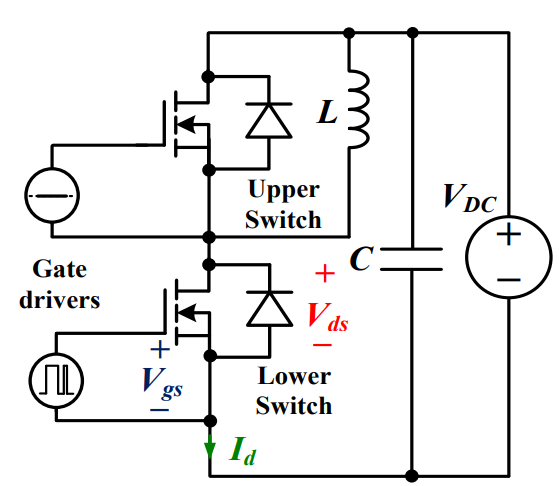 Discovering New and Advanced Methodology for Determining the Dynamic Characterization of Wide Bandgap DevicesSaumitra Jagdale15 March 20242862
For a long era, silicon has stood out as the primary material for fabricating electronic devices due to its affordability, moderate efficiency, and performance capabilities. Despite its widespread use, silicon faces several limitations that render it unsuitable for applications involving high power and elevated temperatures. As technological advancements continue and the industry demands enhanced efficiency from devices, these limitations become increasingly vivid. In the quest for electronic devices that are more potent, efficient, and compact, wide bandgap materials are emerging as a dominant player. Their superiority over silicon in crucial aspects such as efficiency, higher junction temperatures, power density, thinner drift regions, and faster switching speeds positions them as the preferred materials for the future of power electronics.
Read More Applications of FPGAs in Artificial Intelligence: A Comprehensive GuideUTMEL29 August 20255534
This comprehensive guide explores FPGAs as powerful AI accelerators that offer distinct advantages over traditional GPUs and CPUs. FPGAs provide reconfigurable hardware that can be customized for specific AI workloads, delivering superior energy efficiency, ultra-low latency, and deterministic performance—particularly valuable for edge AI applications. While GPUs excel at parallel processing for training, FPGAs shine in inference tasks through their adaptability and power optimization. The document covers practical implementation challenges, including development complexity and resource constraints, while highlighting solutions like High-Level Synthesis tools and vendor-specific AI development suites from Intel and AMD/Xilinx. Real-world applications span telecommunications, healthcare, autonomous vehicles, and financial services, demonstrating FPGAs' versatility in mission-critical systems requiring real-time processing and minimal power consumption.
Read More The 2026 Engineer’s Guide: Choosing the Right MCU for Your Next IoT & New Energy ProjectUTMEL30 April 20261764
A comprehensive comparison of 2026's leading MCUs from ST, NXP, and Microchip across power efficiency, processing performance, connectivity, and ecosystems to help engineers select the optimal chip for next-gen IoT and new energy projects.
Read More AI Server Components: Engineering Next-Gen Data Center Hardware for 100kW RacksUTMEL15 May 2026967
The transition from traditional enterprise IT to AI-driven workloads has rendered legacy data center hardware obsolete, forcing infrastructure planners to re-engineer server components for extreme thermal environments.
Read More The Practical Engineer’s Guide to the NE555N Timer: Pinout, Setup, and TroubleshootingUTMEL29 May 2026750
This comprehensive guide explores the NE555N timer, detailing its 8-pin layout, internal architecture, and key datasheet specifications. It compares the bipolar IC to CMOS variants and details setup configurations for astable, monostable, and bistable modes. Additionally, the guide offers practical troubleshooting advice to prevent common breadboard failures, such as floating reset pins and electrical noise issues.
Read More
Subscribe to Utmel !
![ADATE318BCPZ]() ADATE318BCPZ
ADATE318BCPZAnalog Devices Inc.
![AT88SC0204CA-Y6H-T]() AT88SC0204CA-Y6H-T
AT88SC0204CA-Y6H-TMicrochip Technology
![FSSD06UMX]() FSSD06UMX
FSSD06UMXON Semiconductor
![HCS300/SN]() HCS300/SN
HCS300/SNMicrochip Technology
![AD8232ACPZ-WP]() AD8232ACPZ-WP
AD8232ACPZ-WPAnalog Devices Inc.
![ATECC508A-MAHCZ-T]() ATECC508A-MAHCZ-T
ATECC508A-MAHCZ-TMicrochip Technology
![AD5520JSTZ]() AD5520JSTZ
AD5520JSTZAnalog Devices Inc.
![AT88SC0808CA-SH]() AT88SC0808CA-SH
AT88SC0808CA-SHMicrochip Technology
![AT88SC0204CA-SU]() AT88SC0204CA-SU
AT88SC0204CA-SUMicrochip Technology
![HCS200/SN]() HCS200/SN
HCS200/SNMicrochip Technology


